


Restaurant Technology 2.0 is making the guest experience smarter. The kitchen is still waiting for its upgrade.
The restaurant industry’s Technology 2.0 conversation has a blind spot.
Everyone is asking how to make the app smarter. Almost nobody is asking what the kitchen should do because of what the app just learned.
That gap is not a small oversight. It is where the upgrade stops.
What the First Wave of Restaurant Technology Actually Did
The first era of restaurant technology was exceptionally good at answering one question: what happened?
POS systems captured what sold. Inventory platforms tracked what was on the shelf. Loyalty programs logged what guests ordered and how often. Delivery integrations counted how many orders came through which channel. The technology stacked up into a detailed record of the restaurant’s recent past.
That was valuable. It was also the extent of the ambition.
Technology 2.0 is supposed to answer a more useful question: what should we do next?
The guest-facing side of the industry got partway there. Connecting loyalty data to ordering behavior produces more relevant promotions. Connecting ordering data across channels produces a more consistent experience. That is real progress. But it is orchestration of data about the guest. It is not orchestration of data for the operation.
Most of the tools built to run the back of house were designed to record. They were not designed to turn all that information into the next operational decision.
The Signal That Stops Short
Here is how data actually flows through a modern restaurant, and where it stops.
A guest orders a protein-added bowl. The POS logs it. The modifier attach rate climbs another tenth of a point. The pattern is in the system.
A promotion drives a Tuesday traffic spike. The ordering platform captures it. The aggregate covers number ticks up in the weekly report. The pattern is in the system.
An event two blocks away pulls a different crowd for dinner. Traffic skews heavier, earlier, with a different product mix. The POS sees it happen. The pattern is in the system.
Every one of those signals carries information the kitchen needs: how much protein to prep tomorrow, whether Tuesday staffing should run heavier this week, which items to pull forward for an earlier-than-usual dinner rush. None of them make it to the prep sheet.
The data exists. The failure is that it stops being useful before it reaches the decision.
The Prep Sheet Is Still Manual
A multi-unit restaurant group today might be running POS data across every location, loyalty engagement data tied to individual guests, delivery platform data showing channel mix by hour, historical weather and event patterns matched against traffic, inventory levels from a dedicated management system, and labor costs by position from a scheduling tool.
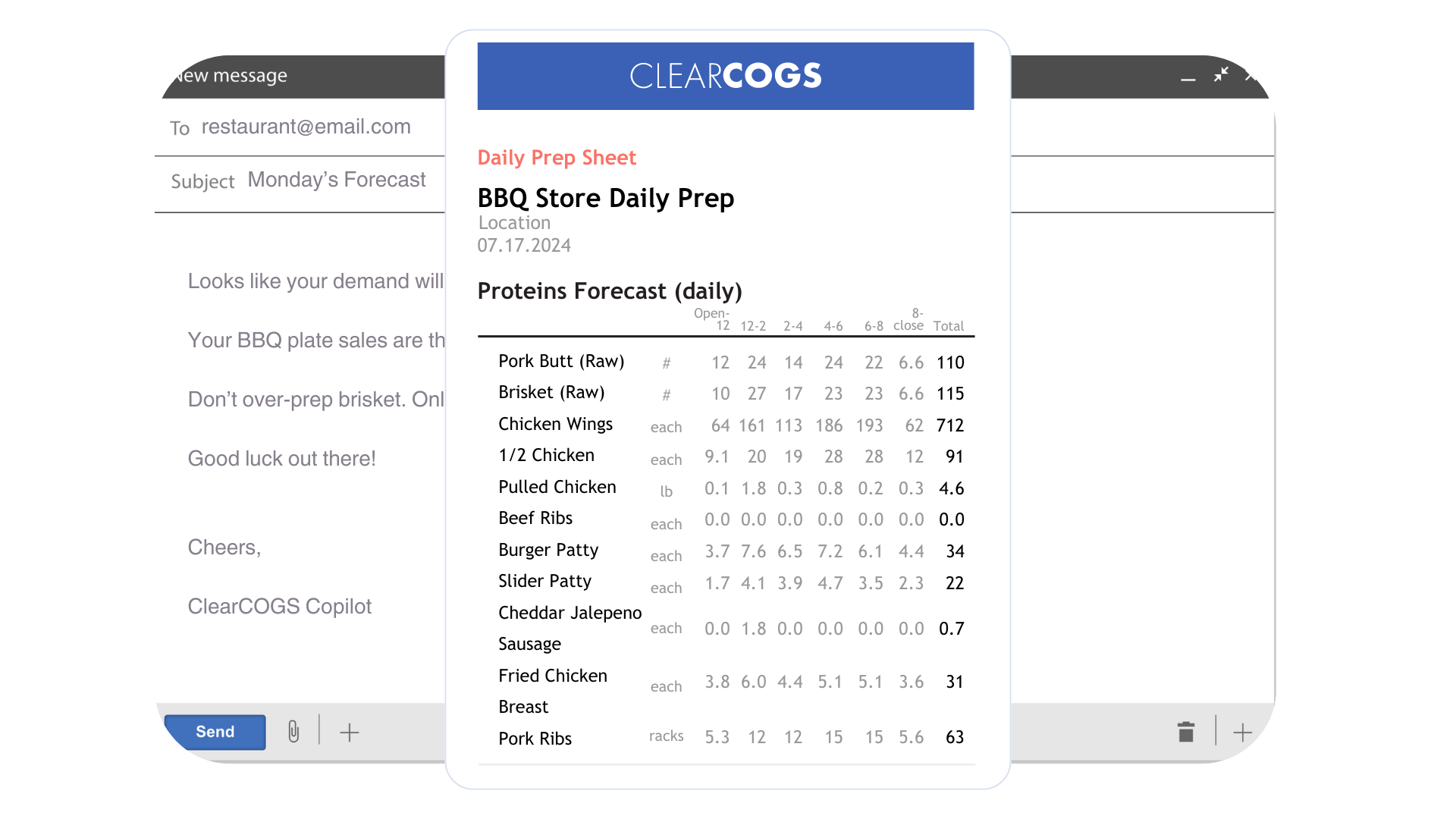
And the opening manager still gets a prep sheet built on last week’s numbers plus a gut-feel adjustment for whatever feels different this Tuesday.
That is not because the data is unavailable. It is because the data was collected to report on performance, not to inform tomorrow’s decisions. The systems that generate it were built to look backward. None of them were built to look forward.
The restaurant is sitting on intelligence. That intelligence is stopping at the edge of the operational system that needs it most.
A sophisticated ordering platform that does not change how much protein the kitchen preps tomorrow is still half a system. A loyalty program that reveals a guest’s ordering pattern without adjusting the prep forecast for that pattern is leaving its most useful insight unused.
The Next Definition of Smart
The next generation of restaurant technology will not be defined by how much data a restaurant collects. It will be defined by how much of that data reaches the decisions made before service starts.
The prep sheet is where all of it should eventually land. It is the last decision made before the restaurant opens, and right now it is the least connected point in the entire technology stack. The restaurant can have the most sophisticated ordering and loyalty infrastructure in the industry, and if the opening manager is still averaging last Tuesday, none of that intelligence changed what actually happened in the kitchen.
That distinction matters because the prep sheet is not just one decision. It determines food cost. It determines how much protein is on hand when the 12:30 rush hits. It determines whether Tuesday’s service runs smoothly or whether the kitchen manager is on the phone at 1 PM trying to source an emergency delivery. Every variance that shows up three weeks later in a food cost report started as a decision that was made without the information that already existed in the system.
The guest-facing industry has spent years proving that connected information produces better outcomes. The same principle applies behind the pass. It just hasn’t been applied there yet.
That is the problem ClearCOGS is built around: turning the data restaurants already generate into decisions their teams can act on before the shift starts.
The app got smarter. The prep sheet is next.
Sources
- Neiman, Hope. From More Tech to Smarter Tech: The Rise of Restaurant Technology 2.0. QSR Magazine, 2026. qsrmagazine.com