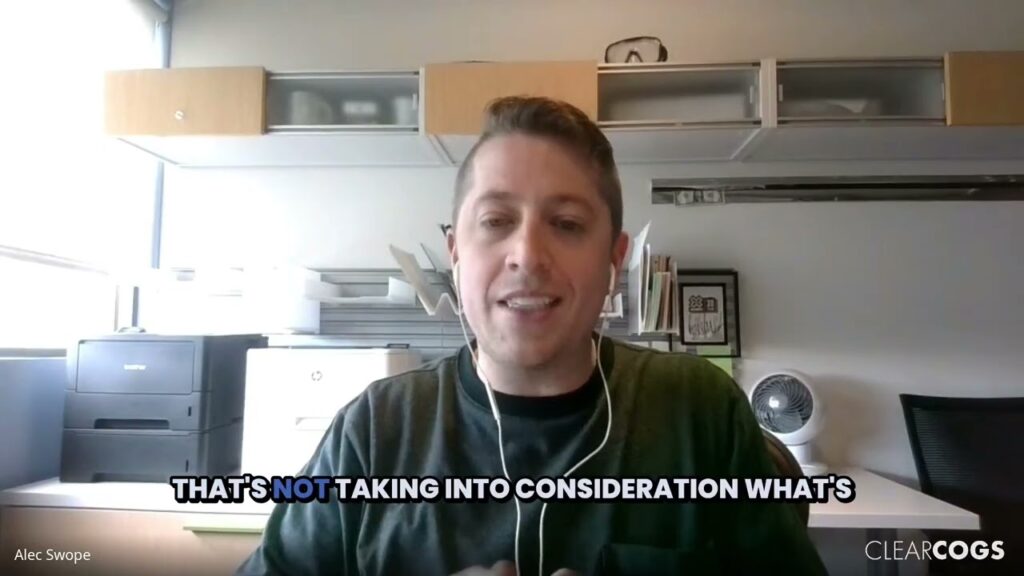



D&D Management Group spent two and a half years building and babysitting their own dashboards across 35 stores. Then they handed the problem to ClearCOGS. CFO Alec Swope walks through what happened next, on camera, in his own words.
What was missing before ClearCOGS?
D&D Management Group runs 35 Jimmy John’s locations across Utah, the largest franchise group in the state. By QSR standards they were already a data-forward operation: a daily flash report, custom dashboards, a finance team that watches labor closely. None of it answered the question Alec Swope actually cared about: what is happening in my stores right now?
Everything ran on yesterday’s numbers and year-over-year comparisons. Useful for a board deck. Useless for the manager standing in a store at 11:40 trying to decide whether to hold staff through the rush or send someone home.
“Year over year is always what you’re comparing towards. But that’s not taking into consideration what’s happening in your stores over the last four weeks.”
Alec Swope, CFO, D&D Management Group
A 35-store group has resources. Why not just build it in-house?
What did D&D try before ClearCOGS?
They did build it. Dashboards layered on top of the reporting stack the franchise system runs on, with a promise of transaction data within ten minutes.
It ran for two and a half years, and it broke for two and a half years. Every failure routed through support queues, and a fix could take close to a month to land. Meanwhile Alec watched the real cost show up in the stores: the first time a manager catches a report being wrong, they stop opening it.
“When restaurant operators look at reports and they know that something’s wrong, they stop looking at them. They just do.”
Alec Swope
Every vendor promises accurate data. Why would this be different?
How do you get managers to trust the data?
Alec’s rule for any new system is blunt: match the source of truth before you ask anyone to change how they operate. When ClearCOGS went in, he checked its numbers against stores he could verify personally.
The data held. Only then did he start layering on the pieces that change behavior, the forecasts and the live labor view. In his telling, correct data is the entire foundation. Without it, nothing else on the screen matters.
“If I know that the data is always going to be correct, and I start making small adjustments from the source of truth, then people buy into that.”
Alec Swope
Numbers on a screen do not run a shift. Managers do.
What about managers who know their restaurant better than any dashboard?
The hard part was never the software. It was the mindset Alec names out loud: I know my restaurant better than you. And he thinks that mindset is half right.
A GM’s feel for their store is real information. So is the forecast. D&D’s bet, and the reason the rollout worked, is that neither one wins alone.
“It’s hard to get out of the mindset of, I know my restaurant better than you. You need to use the analytics and your own experience with your store. Those needed to come together.”
Alec Swope
Fine in theory. But rollouts are where software goes to die.
How hard is it to roll out ClearCOGS?
Alec had been burned by a vendor rollout before, so he braced for this one. What he got instead was silence. No tickets, no complaints, and at first no feedback at all, which honestly made him nervous.
Then at a regular ops meeting he asked his GMs point blank how they were using it. One GM, six-plus years with the company, told a room of his peers that if they watched their dashboards through the busy stretches and the slow ones, they could build better schedules. Other GMs started taking notes.
Alec calls it the easiest rollout he has run, and he credits one thing above everything else.
“To be honest with you, this was the easiest rollout for me, because the data was correct.”
Alec Swope
Want to see what this looks like on your own stores’ data?
Book a MeetingAdoption is nice. What actually changes?
What does ClearCOGS change day to day?
The visible change is in how schedules get made, and remade. GMs build them around when customers actually show up, then adjust in the middle of the day when reality disagrees with the plan.
That includes the hard call: sales are not materializing, and someone gets to go home early. The live view turns that from a guess into a decision.
Alec is careful with numbers, and so are we. He has not put a dollar figure on the impact yet. What he will say is that in a QSR market squeezed from every direction, D&D’s labor has stabilized, and he counts that as the win it is.
“Yes, I built this schedule, but my customers are not coming in today. We need to adjust this. It allows them the ability to see where they can change and make those adjustments.”
Alec Swope
Every vendor is great until you need something fixed.
What is ClearCOGS like to work with?
The signal Alec watches now is what his stores ask him for. They used to call to complain about broken reports. Now they come to him with feature ideas, which he reads as buy-in on the system and on the vendor behind it.
On the working relationship, his words are “excellent communication” and a shared sense of urgency: they feel the same pressure to get this up and running that D&D feels. And when he asks for a change, it shows up fast.
“If I say something to them, the turnaround is not three weeks. The turnaround is sometimes within 24 hours.”
Alec Swope
It worked for them. But is it for you?
Who should be looking at ClearCOGS?
Asked who should be running this, Alec doesn’t hedge: independents, small groups, and franchise groups of every size. “I think every single operator should have this.”
His sharpest advice is for fellow franchisees. The playbook you were handed is not the ceiling, and the technology on the approved list is not always the best available. Watching out for your own business is your job, and nobody else’s.
“No one else is looking out for them except for them. Always be looking at new technology, regardless of what the franchisor is saying.”
Alec Swope
What this looks like for your brand
D&D Management Group proved a specific thing: give store teams data they can trust, in real time, and they will use it on their own. Schedules flex with the day. Labor holds steady in a market where it should be inflating. And a CFO who was skeptical going in now fields feature requests instead of complaints.
If you run a franchise group or a multi-unit brand, we will show you what this looks like on your own stores’ data.
“This dashboard is something that I did not think ClearCOGS was going to be able to do. You guys exceeded my expectations.”Book a Meeting