


By Matt Wampler, CEO of ClearCOGS
Ask a multi-concept restaurant group what changed in their kitchens since 2020, and most won’t lead with technology, or menu, or even labor cost. They’ll tell you about the chefs.
“The chefs we have now are not the same chefs we had seven, ten years ago,” one operator put it recently, describing a group running several concepts. It wasn’t a complaint about effort or attitude. It was an observation about a kind of knowledge that used to live in the kitchen and increasingly doesn’t: the instinct for how much to prep on a Tuesday versus a Saturday, built from years of watching pans empty and walk-ins fill, that simply takes time to develop and even more time to pass down.
What makes this particular story interesting isn’t the talent gap itself. It’s what the operation used to have in place to compensate for it, and what happened to that system when nobody was watching it.
What Discipline Used to Look Like
Before 2020, this group ran what most operators would recognize as a genuinely solid prep process. Written par sheets, reviewed and refreshed every few weeks to reflect recent sales. A batching rhythm that told the kitchen exactly how much to produce, and how many days it needed to last. Not sophisticated by today’s standards, but disciplined, current, and trusted.
That system didn’t fail because of a flaw in its design. It faded because the maintenance stopped, and once the disruption that started it passed, nobody picked the habit back up. The par sheets that used to get refreshed every few weeks settled into something closer to permanent. The kitchen kept working off them long after the numbers underneath had quietly gone stale.
By the time anyone noticed, the gap had become normal. “Now it’s kind of like our sales forecasting is decent, but how that trails down to the kitchen, that’s kind of lost at this point,” is how the operator described it. Corporate could see what was coming in the door. What happened after that, the actual translation into prep decisions on the floor, had drifted out of anyone’s hands.
The Quiet Mechanics of Decay
This is worth sitting with, because it isn’t really a story about a system breaking. It’s a story about a system slowly going unmaintained, which tends to look identical from the outside until the gap becomes large enough to notice.
A par sheet built on March numbers works fine in March. By July, when business has shifted, it’s quietly steering the kitchen toward decisions that no longer match reality. Nobody changed the sheet because changing it was never anyone’s explicit job once the original crisis that prompted close attention had passed. The system kept running. It just stopped being current, one unremarkable week at a time, until “stale but functional” became indistinguishable from broken.
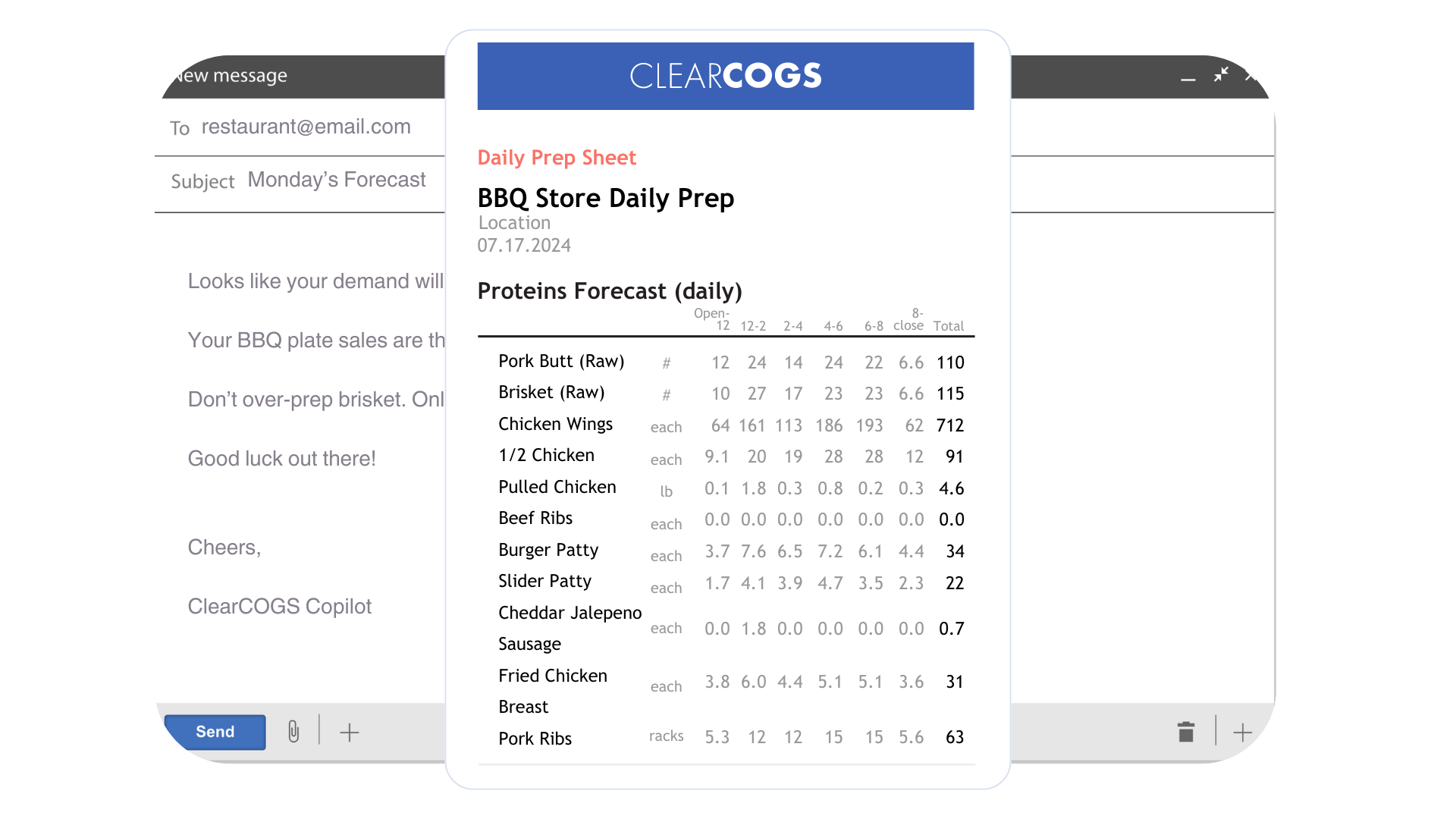
That’s a different failure mode than the one most restaurant technology gets built to solve. It isn’t about giving operators more data, or a better dashboard, or a sharper forecast. The group in this story already has decent sales forecasting. Their gap sits one layer downstream: the step where a sales number becomes a specific instruction about what to make, in what quantity, today. That’s the part that decayed first, because it was the part that depended on someone consistently doing the unglamorous work of keeping a sheet current.
Why Operators Default to Over-Prepping
When a system like this erodes, kitchens don’t usually respond by guessing randomly. They respond by protecting themselves, and the most common form of protection is over-prepping.
This group’s food cost is fairly tight, by their own account, which means the financial damage doesn’t show up as obvious waste. It shows up more quietly, as inventory that gets sold a day later than it should, a margin of safety the kitchen builds in because nobody handed them a number they could fully trust. Multiply that by every shift, every location, every week, and it adds up to a meaningful amount of margin that never gets logged anywhere as a problem because it never looks like a crisis. It just looks like business as usual.
What This Means for Growing Groups
Every multi-unit or multi-concept operator eventually runs into a version of this story, whether or not they recognize it yet. The instinct that used to live in a veteran chef’s head doesn’t transfer automatically to whoever is running the line next. A par sheet that worked when someone owned its upkeep stops working the moment ownership of that task quietly disappears, and disappearing quietly is exactly how these things tend to go.
The harder truth is that this isn’t solved by hiring better chefs, even if better chefs would help at the margins. It’s solved by building the translation step, sales forecast to specific prep instruction, into something that doesn’t depend entirely on one person’s tenure or one person’s habit of updating a spreadsheet every few weeks. According to the National Restaurant Association’s hospitality workforce data, restaurant industry turnover regularly outpaces nearly every other sector, which means betting an operation’s prep accuracy on any single person’s institutional memory is a bet that the industry’s own numbers say not to make.
The group in this story still has good instincts and a system that mostly works. What they’ve lost isn’t talent. It’s the maintenance layer that used to keep a good system honest, and that’s a more fixable problem than it might first appear, once someone names it accurately.
Sources
- National Restaurant Association. State of the Restaurant Industry. restaurant.org