





What does the POS system look like in a world where your phone places the order, AI handles the business rules, and the kitchen runs on predictive intelligence? Jeremy Julian has been thinking about this longer than almost anyone. As the host of The Restaurant Technology Guys Podcast, now nearly 400 episodes deep, Jeremy has had a front-row seat to every major shift in restaurant technology for the last decade. In this episode, he joins Matt Wampler to talk about the evolution of POS from hardware to transaction engine to potential aggregation layer, why the restaurant industry’s best technology does not always win, and what AI actually changes for operators, franchisors, and tech companies trying to serve them.
What You’ll Hear in This Episode
The POS Is Becoming an Aggregation Layer, Not Just a Transaction Engine Jeremy reframes how to think about the modern point of sale. It started as hardware infrastructure, became a payment and transaction system, and is now trending toward being the neutral aggregation layer that connects every channel, every ordering surface, and every back-of-house system together. He draws a sharp line between companies like Toast that built a walled garden and his own philosophy at CBS NorthStar, where 150-plus integrations and open APIs are the product. His argument: long-term, open wins.
Why Restaurant Tech Vendors Are Finally Playing Nice One of the most candid moments in the episode is Jeremy’s take on why restaurant technology companies are more collaborative today than they were a decade ago. He traces it partly to new money and new entrants with a fresh mindset, partly to the threat of incumbent walled gardens forcing smaller vendors to band together, and partly to a simple shift in how APIs work. His point: nobody benefits from fragmentation except the incumbents who designed it.
Independent Restaurants Are the Laboratory, Chains Follow Jeremy makes a distinction that rarely gets made clearly. Independent restaurant owners can try new technology faster, implement it more flexibly, and feel the results more directly than any enterprise chain ever could. He argues they are ahead of the chains in adoption, not behind, and that the enterprise brands are quietly watching and following. The implication for technology companies: the independent operator is not a consolation prize market.
Bundle vs. Best in Class, and Why the Answer Is Who You Are The bundling versus best-in-class debate has no single right answer according to Jeremy. Small operators want one throat to choke, simplicity, and lower cognitive overhead, even if it costs them flexibility. Enterprise chains want leverage, customization, and the ability to swap components without rebuilding everything. His framing is that the right answer is determined by brand ethos, not by what is technically optimal.
Why the Best Technology Does Not Always Win in Restaurants Jeremy is refreshingly honest about this. Operators buy with emotion and justify with logic. A vendor can lie about product capabilities during an RFP, win the deal, and still be in market three years later still not delivering on what they promised. His company has been releasing an ebook on how to run a proper technology RFP specifically because this pattern repeats so often and damages trust for the vendors who actually do deliver.
The POS in a World of Robotic Kitchens and AI Order Taking When Matt pushes Jeremy to paint the picture of where POS sits in a fully AI-driven, potentially robotic restaurant environment, Jeremy lands on this: the POS becomes the transaction engine that feeds intelligence to everything else. Robotic kitchens will still need to know how many wings to drop. Voice AI at the drive-through will still need a system of record. The POS does not get replaced. It becomes the gasoline in the car, the oil in the gears, feeding the systems that do the work.
The Decade of Kitchen Innovation Is Starting Now Both Matt and Jeremy converge on the same conclusion at the end of the episode. The first wave of restaurant tech investment was about generating revenue, driving orders, marketing, and loyalty. The next wave is about operationalizing that demand. Kitchen display systems, forecasting, labor intelligence, and production management are the unsexy backbones of profitability. And they have been underfunded and under-innovated for far too long.
Key Topics Covered
- The evolution of POS from hardware to transaction engine to aggregation layer
- Why independent restaurants are ahead of chains in tech adoption
- Bundle vs. best in class and how to know which fits your brand
- How lower barriers to entry created more noise but also more competition
- Why restaurant technology vendors are finally collaborating
- The role of POS in a robotic kitchen and AI-driven ordering environment
- Why the best tech does not always win and what operators can do about it
- How to run a proper technology RFP
- The pendulum swing between bundling and unbundling in software
- Why the kitchen is the next frontier for restaurant technology investment
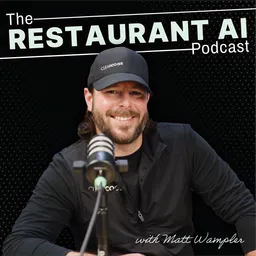
Subscribe to the Restaurant AI Podcast on YouTube or Spotify
Follow the Restaurant AI Podcast on LinkedIn
Connect with Matt Wampler and ClearCOGS on LinkedIn


