




Billions of dollars have flowed into the front of the house. Online ordering, loyalty programs, kiosks, marketing platforms, and digital menus have all attracted enormous investment. And all of that demand lands in the same place: the kitchen, which in most restaurants is still running on gut instinct and pieces of paper. David Corts, CEO of Fresh Technology and the company behind Fresh KDS, has spent the last several years building what he calls a system of intelligence for the kitchen. In this episode, he joins Matt Wampler to explain why the KDS is the most underleveraged asset in the restaurant ecosystem, why average ticket time strips all meaning out of data, and why the decade of kitchen innovation is finally here.
What You’ll Hear in This Episode
Why the Kitchen Is the Most Underleveraged Asset in the Restaurant David traces the investment thesis behind Fresh KDS back to a simple observation: every wave of restaurant technology has been focused on generating revenue, and all of that omni-channel demand lands in the same overwhelmed kitchen that was never designed to receive it. He describes watching restaurants go from a physical governor on incoming orders to a world where a million cheeseburgers could be ordered simultaneously from delivery apps, kiosks, and online channels at once. The kitchen screen was the one place collecting real operational data in real time and nobody was doing anything with it.
Average Ticket Time Is a Meaningless Metric One of the sharpest moments in the episode is David’s argument that averages were invented to strip all meaning out of data. If your average ticket time is eight minutes but a customer waited 25, the average is useless to that customer and useless to you. He explains how Fresh KDS builds its system of intelligence around a different question: was each individual order delivered on time relative to the channel it came through and the expectation it set? That is the metric that actually drives repeat business, and he backs it with data.
The Two Things That Actually Drive Repeat Business David has studied this carefully. Of all the variables that determine whether a customer comes back to a restaurant, two are disproportionately weighted: was the food good, and did it arrive when they expected it to? Everything else, the loyalty app, the beautiful iPhone experience, the brand marketing, matters far less. He argues that most technology investment has gone to the things that barely move those two needles while the thing that moves them most, kitchen performance, has been systematically underfunded.
The Composable Layer: Android-Level Flexibility with Apple-Level Guardrails Fresh KDS built what David calls a composable layer that allows any restaurant to build their own kitchen workflows from first principles. Triggers, conditions, and actions can be strung together to make the system behave exactly the way each location needs it to behave. A large order gets flagged. A specific modifier sends an alert to the expo station. A volume threshold changes the routing logic. He describes it as giving operators the configurability of Android within a UI framework that still has enough guardrails to prevent the kitchen from turning into chaos.
Don’t Do AI for the Sake of AI David draws the comparison to the dot-com bubble explicitly. In the late nineties, companies were doing internet for the sake of internet, and most of it disappeared. He sees the same pattern repeating in restaurant AI right now. His approach at Fresh KDS is the opposite: start with the specific problem you are trying to solve, which is delivering every order on time across every channel, and then identify where AI actually helps do that. The semantic layer and the ontology behind their system of intelligence are built to give meaning to the raw event data the KDS generates, not to chase a buzzword.
Why Forecasting and the KDS Need to Talk to Each Other David is specific about the ClearCOGS integration and why it matters. A kitchen display system that knows what orders are coming in real time is only as powerful as the forecasting layer that tells it what demand is coming before it arrives. He describes the partnership between Fresh KDS and ClearCOGS as turning a reactive kitchen into a proactive one, and he frames the broader vision the same way: agents from different best-in-class systems sharing data and intelligence through open APIs is how the intelligent kitchen of the future actually gets built, not through one all-in-one platform trying to own everything.
Vibe Coding Your KDS and What That Future Looks Like One of the most forward-looking moments in the episode is the conversation about what happens when the composable layer matures to the point where a restaurant operator can essentially describe the kitchen workflow they want and have the system build it for them. David connects this to the broader shift from software to intelligence: the interface disappears, the dashboards become unnecessary, and the system just tells the operator what they need to know and does what they need it to do.
Key Topics Covered
- Why all front-of-house investment eventually lands in the kitchen
- What a kitchen display system actually is and why most restaurants still use printers
- The composable layer: triggers, conditions, and actions for custom kitchen workflows
- Why average ticket time is the wrong metric to run a restaurant on
- The two variables that disproportionately drive restaurant repeat business
- How Fresh KDS is building a semantic layer and ontology to give meaning to kitchen data
- The ClearCOGS and Fresh KDS integration: from reactive to proactive kitchen operations
- Why doing AI for the sake of AI is the fastest way to build nothing
- Best in class vs. all in one and why David already tried the all-in-one path
- What the intelligent kitchen actually looks like in one to three years
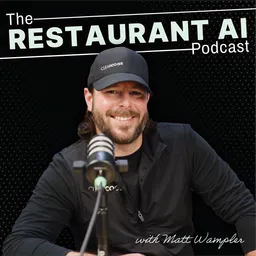
Subscribe to the Restaurant AI Podcast on YouTube or Spotify
Follow the Restaurant AI Podcast on LinkedIn
Connect with Matt Wampler and ClearCOGS on LinkedIn


