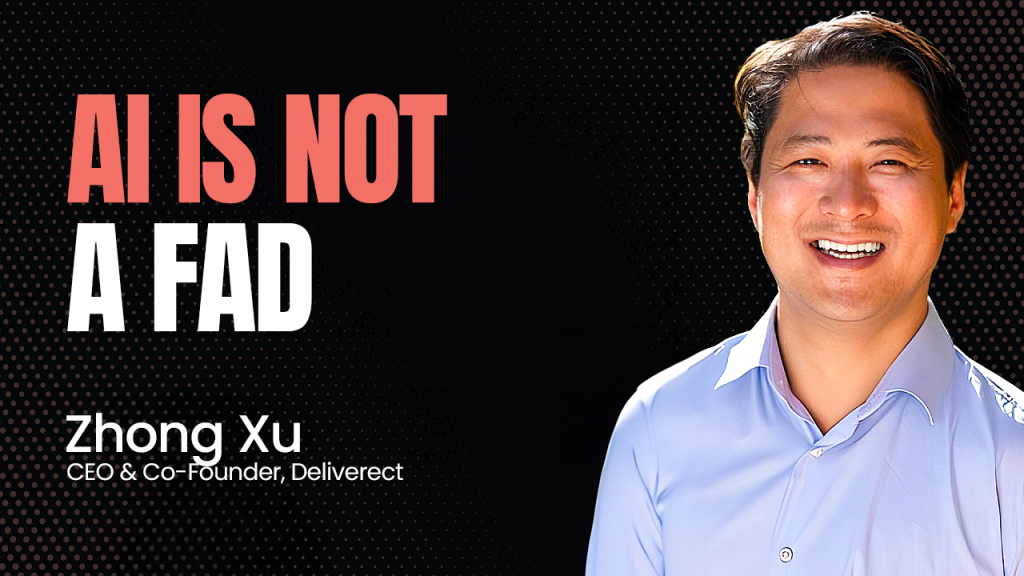



Zhong Xu, co-founder and CEO of Deliverect, shares his remarkable journey from creating one of the first iPad point-of-sale systems to building a billion-dollar restaurant technology platform that now powers over 70,000 restaurants worldwide. In this wide-ranging conversation, Xu discusses the evolution of restaurant digital ordering infrastructure, the challenges of integrating 15,000+ different POS systems, and how AI and agentic commerce are reshaping the future of food delivery.
Restaurant Technology Evolution & Digital Ordering Platforms Xu traces his 20-year journey in restaurant technology, starting with building websites for Asian restaurants as a teenager to launching Lightspeed (now publicly traded) and ultimately founding Deliverect to solve the growing complexity of omnichannel ordering. He explains why restaurants needed a dedicated middleware solution as third-party delivery marketplaces like Uber Eats, DoorDash, and Grubhub began capturing 20-30% of restaurant revenue, creating operational chaos with multiple tablets and disconnected systems.
The POS Landscape: Fragmentation vs. Consolidation Despite predictions of market consolidation, the point-of-sale industry remains highly fragmented with approximately 15,000 different POS systems globally. Xu explains why legacy enterprise systems (like Micros 3700) coexist with modern cloud-based solutions, the “CIO killer” reputation of POS migrations, and why changing a point of sale at large restaurant chains can cost hundreds of millions of dollars. The conversation explores how hardware-software separation has lowered barriers to entry for new POS companies targeting ethnic restaurants, stadiums, and niche segments.
Third-Party Delivery Economics & Restaurant Profitability Xu provides insider perspective on the economics of delivery marketplaces, noting that platforms have shifted from heavy customer acquisition subsidies to focusing on profitability and operational efficiency. He discusses the reality that 5-8% of delivery orders have errors, with shocking data revealing that approximately 60% of refund claims involve fraud—including customers using AI to manipulate burger photos to appear undercooked. Deliverect’s AI-powered Resolve product uses computer vision to verify order accuracy at packing stations, protecting both restaurants and marketplaces from false claims.
Menu Optimization & Dynamic Pricing Through AI One of Deliverect’s most powerful applications involves AI-driven menu management that automatically adjusts digital menus every 10 minutes based on weather, time of day, and customer behavior patterns. Coffee shops see cold beverages promoted during hot weather, while healthy options surface during peak exercise hours. This dynamic optimization can increase top-line sales by 15-20% without raising prices, simply by presenting the right products at the right moments.
Model Context Protocol (MCP) & Agentic AI in Restaurant Operations Xu provides one of the clearest explanations of Model Context Protocol and its implications for restaurant technology. Unlike traditional APIs that provide raw data dumps, MCP acts as an intelligent translation layer that understands business context—knowing, for example, that when a specific restaurant owner asks for “best performing items,” they mean highest profit margin products, not highest revenue. He discusses how Deliverect is building MCP servers to enable future agentic commerce, where customers can simply tell their AI assistant to “order a salad under $20 delivered in 30 minutes” and have it seamlessly fulfilled across multiple platforms.
The Reality of Drone Delivery & Autonomous Food Transport Xu shares firsthand experience integrating drone delivery providers like Flytrex and Wing, predicting that autonomous food delivery (both drones and self-driving vehicles) will become mainstream within 2-3 years. He notes the technology already exists—regulatory approval is the primary bottleneck. The economics are compelling: autonomous delivery could reduce costs from $20 to $4 per order by eliminating driver wages, tips, and vehicle expenses.
Building and Validating Restaurant Technology Products Drawing lessons from launching one of the first iPad POS systems alongside Square, Xu emphasizes the importance of manual validation before coding. For Deliverect’s MVP, he used Excel spreadsheets and hired interns to manually punch orders into POS systems, validating customer willingness to pay before writing a single line of software. He stresses that 100 actively using restaurant locations constitutes a true MVP in the restaurant industry—providing sufficient signal to invest in scalable infrastructure.
AI-Assisted Development & Security Considerations While embracing AI coding tools like Cursor and Windsurf for rapid prototyping and UI development, Xu maintains that core system architecture requires traditional engineering rigor. He compares software to home construction: AI excels at “interior design” (facades, dashboards, interfaces) but foundational infrastructure demands careful planning, security guardrails, and human oversight—especially when dealing with sensitive restaurant data, payment information, and cross-platform integrations.
The Future of Restaurant Technology Infrastructure Looking ahead, Xu envisions a world where restaurants maintain control of their digital presence across an expanding array of ordering channels—not just today’s delivery marketplaces, but also social commerce on Instagram and TikTok, voice ordering through smart home devices, IoT-enabled appliances, and emerging AI agent platforms like OpenAI’s app store. Deliverect’s role as the “nervous system” connecting all these channels to restaurant operations becomes increasingly critical as ordering touchpoints proliferate.
This conversation offers rare insights into the technical, operational, and strategic challenges of building restaurant technology at scale, from a founder who has successfully navigated the space across three companies and two decades. Whether you’re a restaurant operator evaluating technology investments, a technologist building in the hospitality space, or an investor assessing the restaurant tech landscape, Xu’s perspective on industry fragmentation, AI implementation challenges, and the evolving digital ordering ecosystem provides invaluable context for understanding where restaurant technology is headed.
Subscribe to the Restaurant AI Podcast on YouTube or Spotify
Follow the Restaurant AI Podcast on LinkedIn
Connect with Matt Wampler and ClearCOGS on LinkedIn